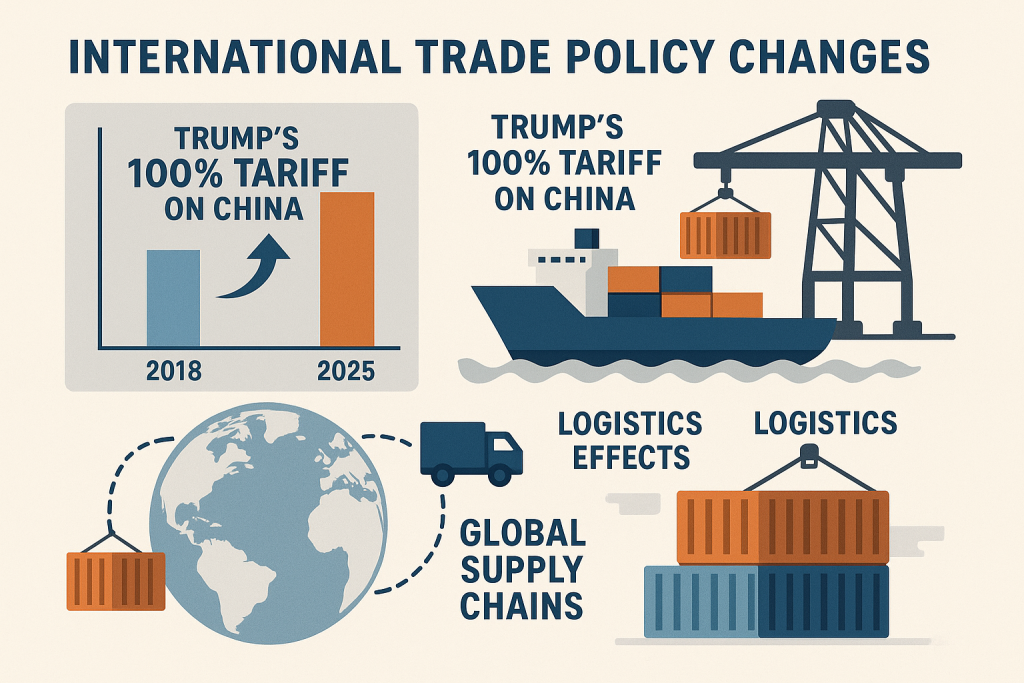
On November 1, 2025, the United States officially implemented a policy imposing an additional 100% tariff on Chinese goods. This move not only triggered severe volatility in global financial markets but also had profound implications for international maritime logistics and supply chain configurations. According to preliminary customs statistics from October 2025, the impact of this policy on bilateral trade between China and the United States is expected to increase logistics costs by more than 20% annually. Corporate supply chain resilience is facing unprecedented challenges, making flexible supply chain adjustments an urgent necessity for effective risk management.
Analysis of the 100% Tariff Policy’s Impact on Maritime Logistics and Supply Chains
Compared to the 10% to 25% tariffs imposed during the 2018-2020 period, this significant increase in tariff rates means that nearly all Chinese exports to the United States now fall within the scope of taxation, adding unpredictability to supply chain costs. This not only signifies a substantial rise in direct tariff expenses but also compels companies to reconsider the configuration of their production and transportation nodes.
According to a 2025 report by the International Shipping Association, maritime freight rates have been continuously rising against the backdrop of the pandemic and recovering global demand. The additional 100% tariff will undoubtedly further drive up the cost of final products, particularly affecting high-value-added items such as electronic components and mechanical equipment. Many companies have already begun adopting small-batch, high-frequency delivery methods to reduce inventory risk. However, this simultaneously increases logistics frequency, further elevating overall freight costs.

Dual Pressure from High-Tech Export Controls
This policy also imposes export controls on all critical software from China, restricting the international flow of technology and software. For the high-tech industry, this creates bottlenecks in the technology supply chain, affecting product development and production coordination. For instance, in sectors such as semiconductors and 5G communications, core components and technical services face the risk of supply chain disruption. Under these circumstances, companies must re-plan their technology procurement and cooperation mechanisms to ensure supply chain stability.
Implementing multi-source supply strategies and strengthening compliance with regulatory frameworks will be key to reducing legal and reputational risks. As export controls become increasingly stringent, companies should establish cross-departmental cooperation mechanisms to ensure that all technology transactions comply with U.S. legal requirements, thereby avoiding substantial fines and business restrictions.
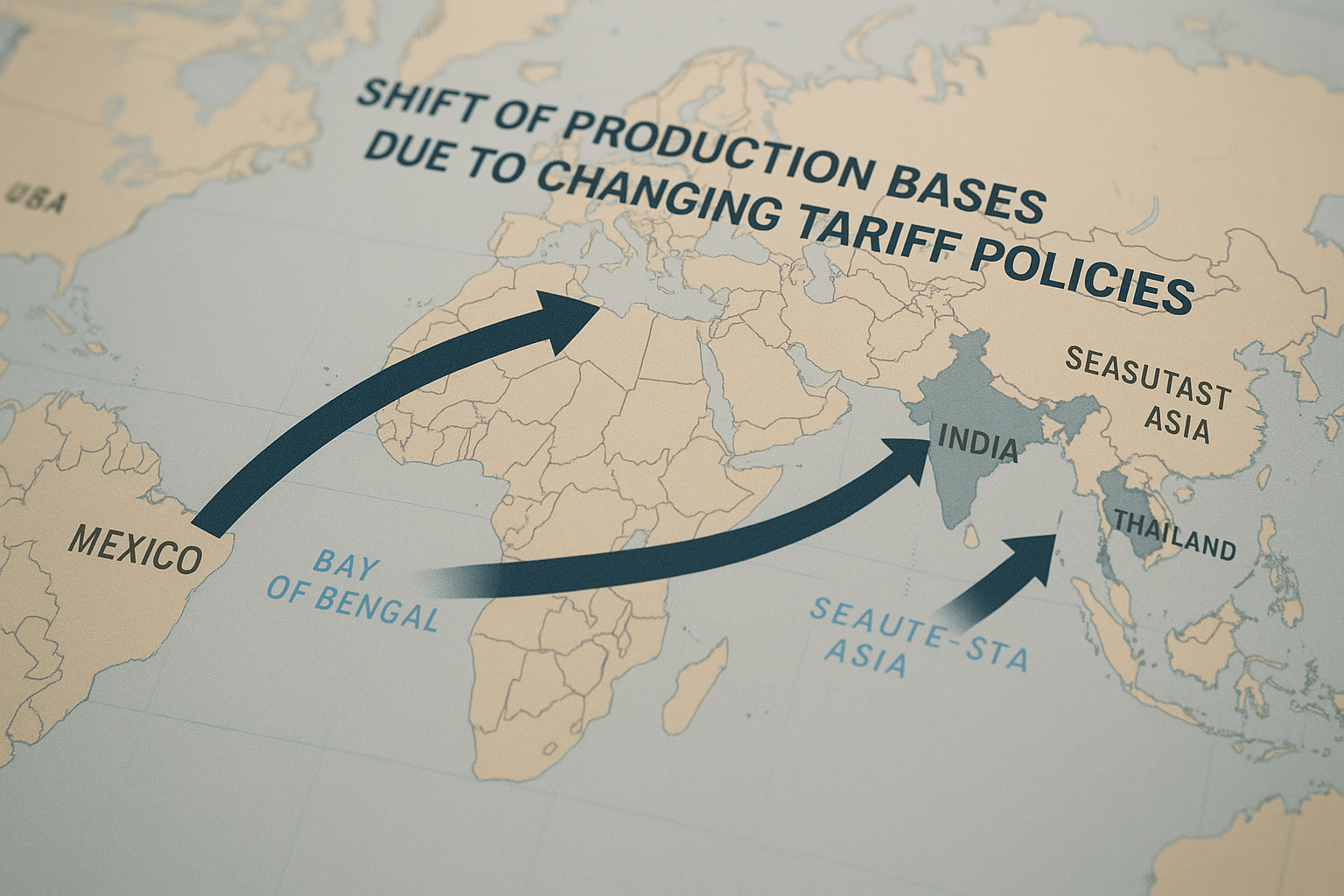
Supply Chain Diversification and Industrial Location Adjustment Trends
According to the 2025 Asian Supply Chain Survey Report, in response to soaring tariff costs, over 60% of surveyed companies have begun accelerating the relocation of some production bases to countries with lower tariff policies, such as Southeast Asia, India, and Mexico. This not only helps alleviate tax burdens but also enhances the ability to diversify foreign trade and logistics risks. From a maritime logistics perspective, this trend will create new shipping route demands and logistics node reorganization, with port cargo redistribution and capacity adjustments becoming focal points for the industry.

Market Volatility and Professional Risk Management Strategies
Following the announcement of the U.S. policy, U.S. stocks and global financial markets experienced temporary volatility, reflecting investors’ heightened vigilance regarding escalating trade frictions. Companies urgently need to strengthen risk early-warning systems, integrate big data analytics, and monitor inventory status and price fluctuations in real-time to enhance decision-making agility.
It is recommended that companies approach this from the following perspectives:
- Supply Chain Restructuring: Conduct assessments of geographic diversification of supply bases and supplier diversification to reduce dependence on a single market.
- Compliance Risk Management: Establish dedicated teams to monitor changes in export controls and tariff policies, and strengthen collaboration with legal departments.
- Logistics Flexibility Enhancement: Explore multimodal transport and flexible scheduling solutions to reduce risks associated with reliance on a single transportation mode.
- Policy Dynamics Monitoring: Continuously track policy changes by the Chinese and U.S. governments, referencing free trade agreements and subsidy policies to seek potential cost mitigation opportunities.
Conclusion
The U.S. measure to impose an additional 100% tariff on Chinese goods and strengthen export controls starting in November 2025 will profoundly reshape the global international trade order and maritime logistics landscape. This is not merely a challenge to cost structures but also a litmus test for companies’ ability to integrate supply chain flexibility and risk management. Only through strategic adjustments and compliance adherence can companies maintain competitiveness in an unpredictable global environment and prepare in advance for future market volatility. The key lies in how to flexibly utilize existing logistics resources, promote diversified supply chain configurations, and establish comprehensive compliance mechanisms—these will become the decisive factors for companies’ success in the new wave of international trade restructuring.