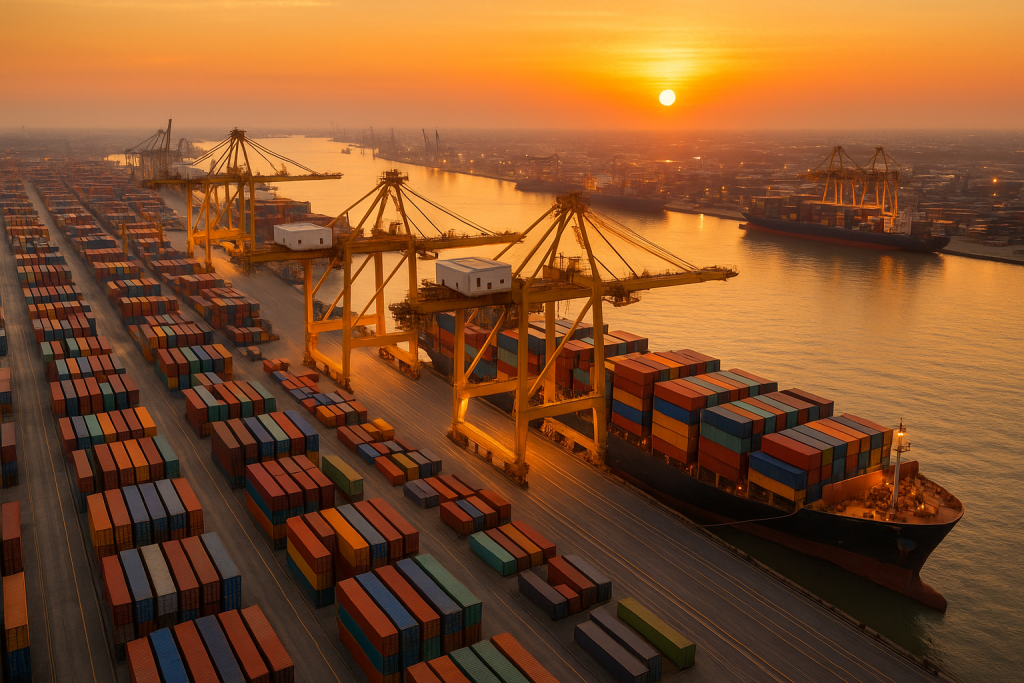
Welcome to the Great Shipping Secrets of a City Without a Sea!
Heard that Mexico City has no shipping port? That’s right. It’s like that friend who always stands by the pool but never jumps in. But don’t underestimate it—this landlocked giant relies on a crew of port buddies to thrive in the international shipping world. Want to know how to break the curse of “no sea, no trade”? Keep scrolling, hot logistics gossip awaits you!
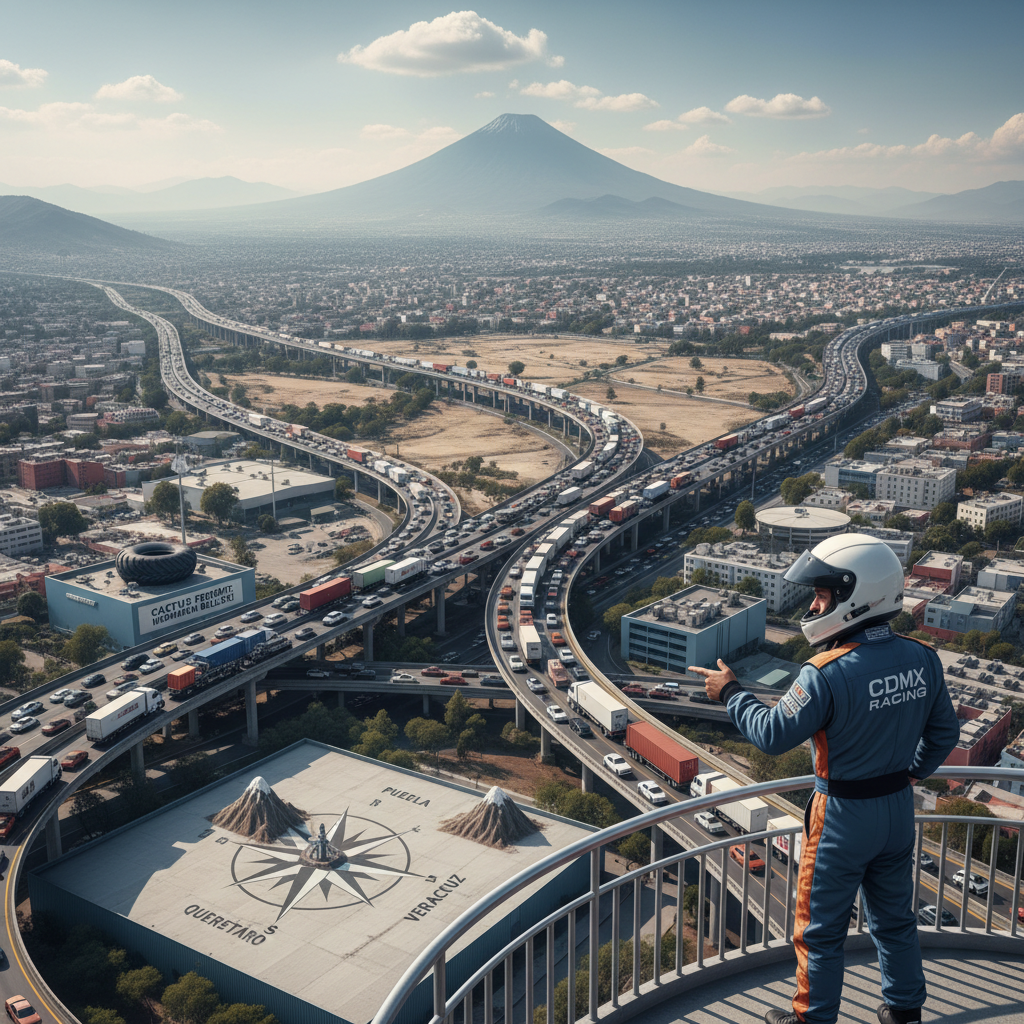
1. Mexico City: The Logistics Miracle of an Inland King
Takeaway: Mexico City doesn’t fear having no seaport—with roads, railways, cargo, and strategy, coastal goods rely on it to “swipe in”!

Four Major Port Treasures Serving Mexico City
When it comes to Mexico City’s shipping “backers,” don’t underestimate these four big shots—each one is a celebrity star in the shipping world.
1. Port of Manzanillo — The Overflowing Container Port on the West Coast
- Location: Pacific coast of Colima State, super solid facade.
- Signature Skill: Massive deep-water port that can handle giant container ships, more impressive than movie dinosaurs.
- Logistics Secret: Port equipped with complete railway and highway systems, allowing cargo to fly from the Pacific directly to Mexico City.
- Main Cargo: Electronics, machinery and equipment—VIP representative of west coast freight.
2. Port of Lázaro Cárdenas — The Super Saiyan of Industrial Logistics
- Location: Michoacán State, southwestern Pacific.
- Port Features: The nation’s largest industrial cargo port, loading and unloading cargo as efficiently as eating snacks.
- Logistics Highlight: West coast railway terminal directly connects to Mexico City, factory goods arrive in minutes.
- Main Cargo: Industrial raw materials, heavy machinery—the logistics backbone of manufacturing.
3. Port of Veracruz — The Historic Big Brother of the Atlantic
- Location: Eastern coast of the Gulf of Mexico, facing the Atlantic.
- Port Glory: The nation’s largest eastern port, long history, solid equipment.
- Cargo Flow: Connects U.S. East Coast and European routes, the essential gateway for Mexico City’s eastern cargo.
- Cargo Types: Liquid bulk cargo, versatile containers.
4. Port of Altamira — The Heavy Industrial Stage
- Location: Northern Tamaulipas State, near the Gulf of Mexico.
- Port Features: Suitable for chemicals and heavy machinery cargo, advanced facilities.
- Logistics Position: The golden key for petrochemical and heavy industry users, reliable highway and railway connections.
Takeaway: Four ports, four spheres of influence, jointly building Mexico City’s international logistics network. Calling them the “Port Avengers” is no exaggeration.
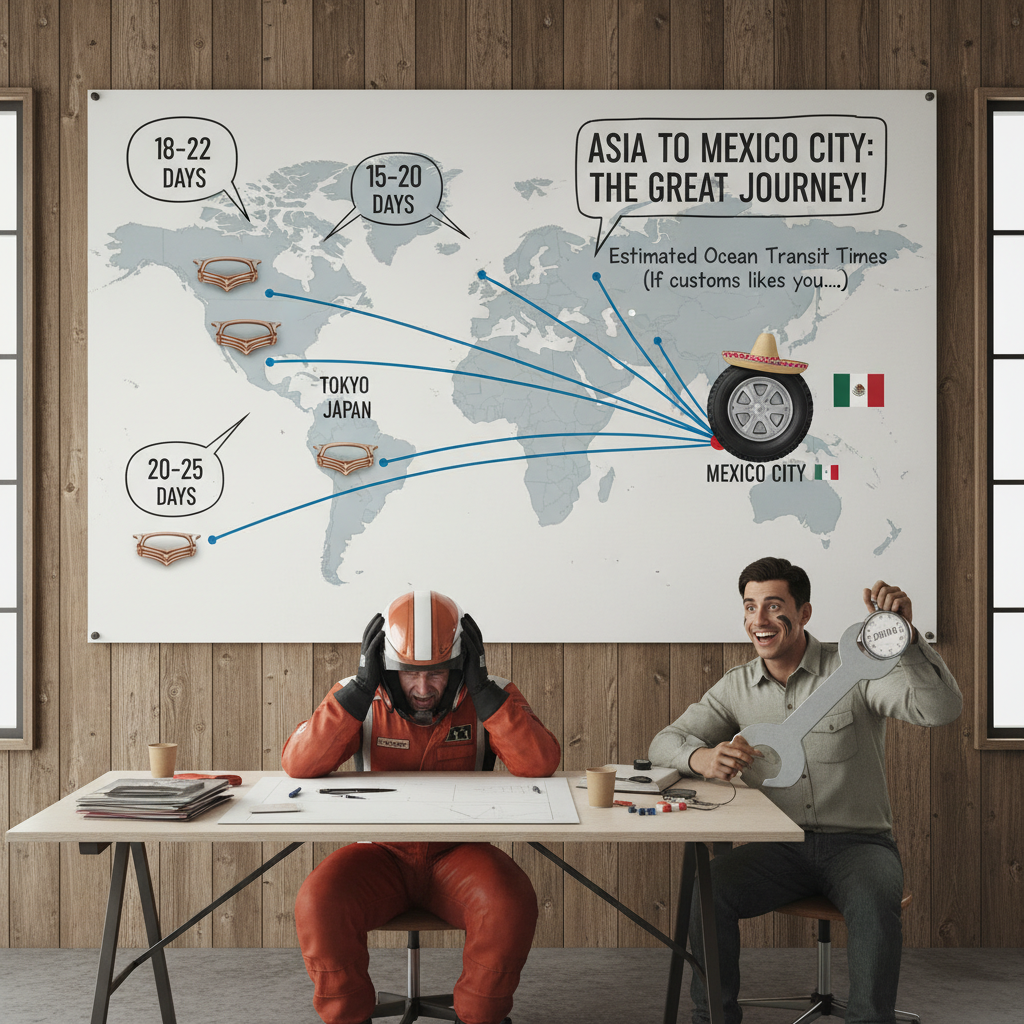
Asia to Mexico: Tracking the Time Magic of Cargo
“How does cargo drift across the ocean from distant Asia to find Mexico City?” This is everyone’s burning question.
| Departure Port | Arrival Port | Shipping Time |
| Shanghai | Veracruz | Approx. 25-30 days |
| Shenzhen | Manzanillo | Approx. 20-25 days |
| Guangzhou | Acapulco | Approx. 22-27 days |
| Ningbo | Ensenada | Approx. 28-33 days |
| Tianjin | Lázaro Cárdenas | Approx. 23-28 days |
So, the voyage takes about 3-4 weeks, then inland transport takes another week or so, totaling roughly a month and a half. Sounds long? Don’t forget that during this time, ocean container ships crossing the sea might still be faster than humans scrolling on their phones.
Takeaway: From boarding to landing in Mexico City, approximately 30-40 days—logistics is like a slow-motion blockbuster, every second meticulously orchestrated.
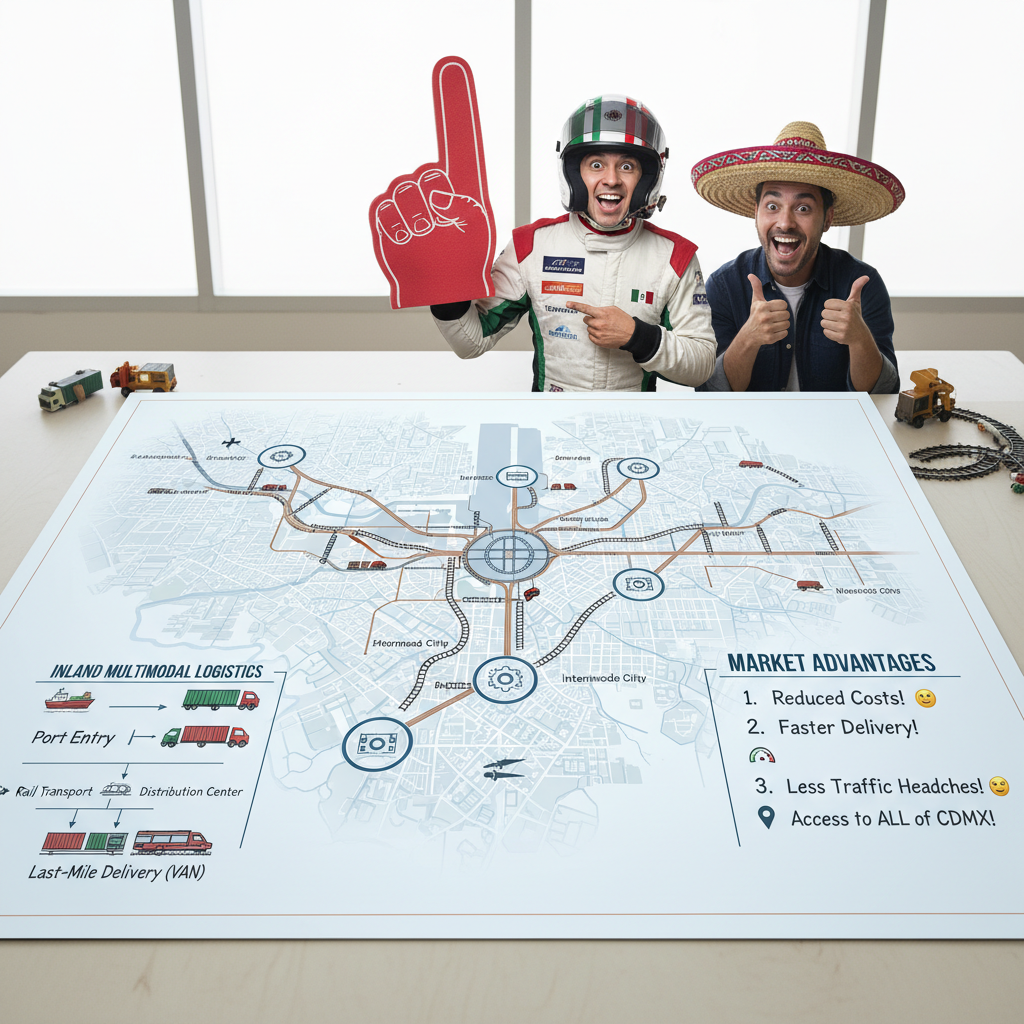
Why Is Mexico City’s Inland Logistics So Strong?
To be this “fast” without a seaport, you need these tricks:
- Intermodal Transport: The super combo of highways + railways working together—how can packages not fly fast?
- Customs Tiger Catcher: Mexico City is the hub for customs clearance and inspection. As the saying goes, “No clearance, no cargo distribution.”
- Home Market Advantage: The nation’s largest market—cargo arrives here and immediately jumps onto shelves, selling faster than hot idol merchandise!
Takeaway: In the logistics chain, Mexico City is that master receiver, making cargo “move” and speed up.
Conclusion: Not a Seaport, But Still Riding the Waves!
Mexico City may be a “landlocked shipping tycoon,” relying on its four major port partners—Manzanillo, Lázaro Cárdenas, Veracruz, and Altamira—and the inland network woven by high-speed railways and highways to achieve its core role in international trade.
In short: You can be without a sea, but you absolutely cannot be without strategy.
Extended Reading
- • Detailed Explanation of Mexico’s Main Shipping Ports — Sofreight
- • Mexico Bridging Ports and Inland Transport — Aotong Cross-border Logistics Analysis
- • Mexico City Logistics and Shipping Overview — Baiyun Network